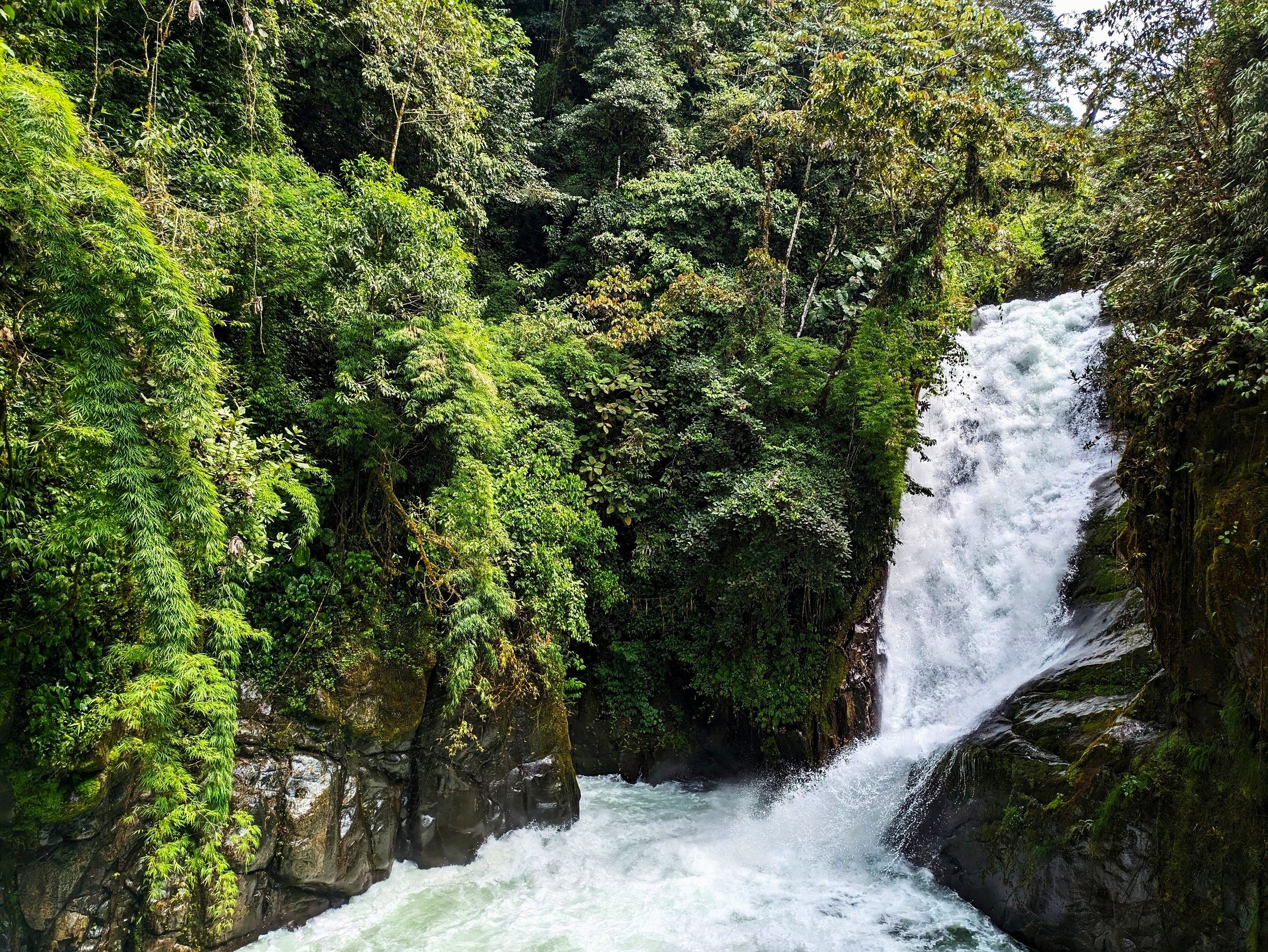
The Children’s Eternal Rainforest
In the 1980’s only 30% of Costa Rica’s rainforest remained. It was all being logged for lumber and cow pasture. Local residents were doing everything they could to eke out living in a climate and topography not suited to cattle. They didn’t know what else to do, or the value of the forest they were cutting down.
In 1987, across the world, a teacher in Sweden was teaching her student’s about rainforests. The children asked,
“Is it true that rainforests are disappearing?”
“Yes,” said the teacher, “it’s true.”
“But we have to do something about it,” the children said. Nine-year-old Roland suggested,
“Why can’t we buy a rainforest?” (The Children’s Eternal Rainforest - Alive Magazine, 2014)
To the children’s luck, who should visit them next week but the American Biologist Sharon Kinsman from Monteverde, Costa Rica where agricultural development was destroying the last cloud forests in the region. Kinsman showed the children pictures of the forest, and told them stories of the hundreds of birds, animals, insects, and unique plants found there. She lit a spark of imagination. She showed them the incredible value of this exotic rainforest.
The children were ecstatic. They set up lemonade stands, they asked their parents, family members, and friends to help them save the rainforest. Within a day they had a couple hundred dollars. Soon fifteen acres were purchased. This small success spread like wildfire turning into a global movement. Children from 44 countries created bake sales, washed cars, held rabbit races, and did anything they could to protect Costa Rica’s rainforest.
These children, through their unstoppable determination, changed the legacy of the Monteverde region. Saving first four acres, then fifteen, then more and more.
Soon locals caught on, realizing the incredible value of what they had. Visitors both national and international started flooding in. Even farmers that didn’t care about the forest suddenly had an economic incentive to preserve it, tourists wouldn’t come to a cow field.
Monteverde: From desperate farm subsistence to ecological, small business, and community resilience.
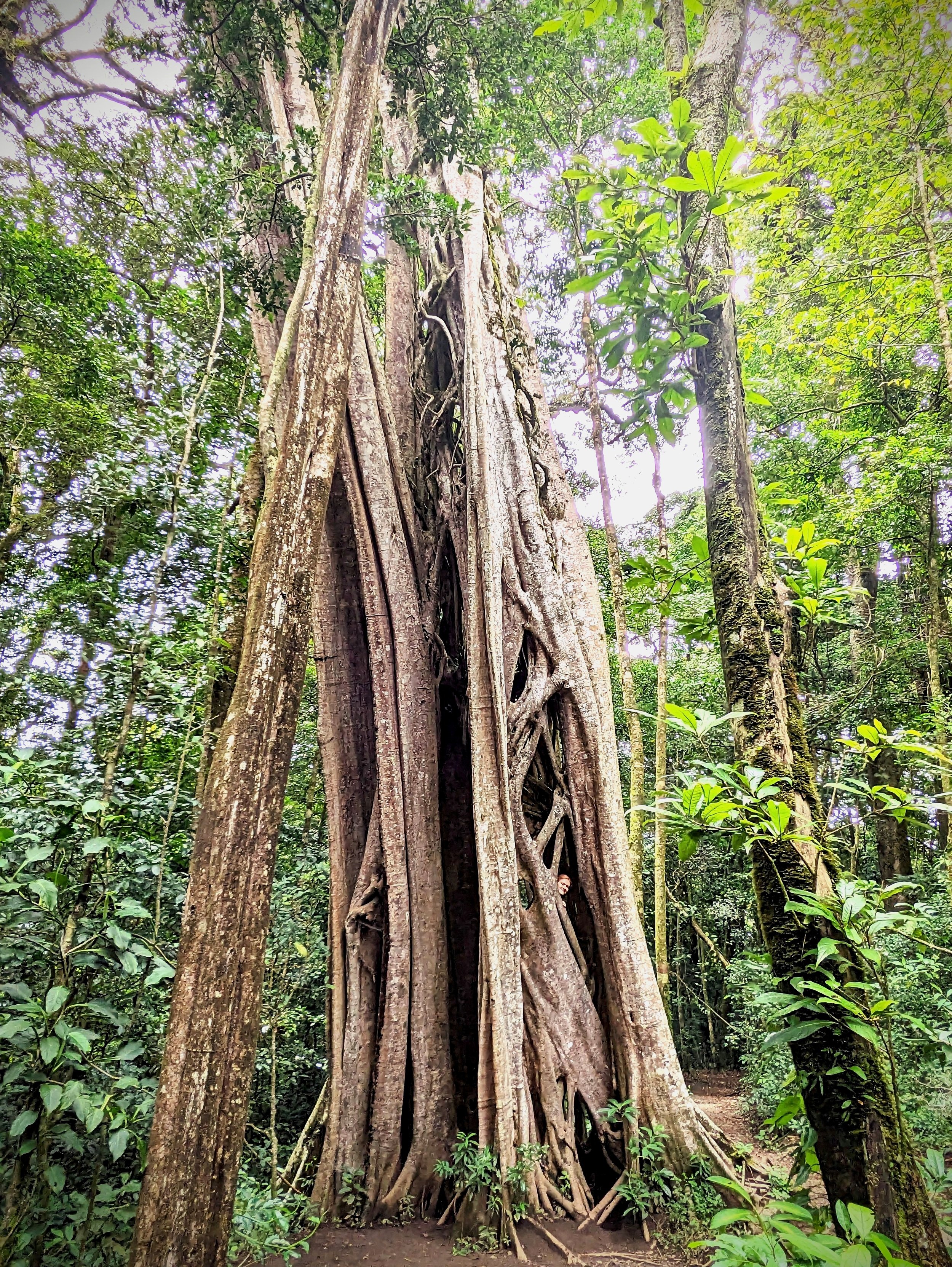
A Giant Ficus Tree: home to incredible birds, animals and, and insects in Monteverde, Costa Rica.
As of 2024, the “Bosque eterno de los niños” is 56,000 acres strong and growing and there is nothing quite like it in the world.
For the Monteverde region, it took the likes of little children across the world for local people to realize the priceless value of their tropical rainforest. And as I stood under the waving branches of tropical fern trees listening to the eerie call of the White Bellbird, as a researcher and tourist, I couldn’t deny it: the region’s real value was in the living landscape.
I happened to be in Monteverde for the historical day when they became their own “caton” or county allowing local people say over their tax dollars, and local government. Monteverde has become a thriving model of community resilience. Residents work together to protect the value of what they have, and help each other through difficult times, such as like the flood of yesteryear that washed out the road leaving them stranded for two weeks. Monteverde is a world-clase model of community resilience largely because they recognized the value of what they have, worked to protect it, share it with visitors, and work together as a thriving community.