New Zealand Conservation
New Zealand was once so full of bird life that sailors could hear the country before they saw it. Much has changed since then. NZ has lost 53 species of birds, many of which are found nowhere else in the world.
Why? In the 1840s, Europeans came, bringing a host of invasive mammals. These mammals multiplied, spreading throughout the country.
According to the department of conservation, twenty five million native birds are killed by predators each year.
A man Jim Lynch decided to do something about it. Early in 1990, Jim proposed a strategic plan to “Bring the Birds back to Wellington.”
Maybe all the predators in Wellington couldn’t be eliminated. But what if a giant fence kept them out, protecting the birds? Zealandia was born with a 500 year vision to restore the sanctuary to its ancient pre-human forest.
After nearly a decade of testing fences, research, community enthusiasm, and 2.5 million NZD raised, the project began. Fence construction began in April of 1999, and was completed four months later.
Then began the eradication. Poison, traps, guns, complex monitoring techniques, and hundreds of volunteer hours. By 2000, the last rabbit was exterminated, and Zealandia became the worlds’ first pest-free zone in an urban environment.
Bird life exploded in the sanctuary, it overflowed the fences. The city botanical garden’s soon complained that the Kaka’s (native parrots) were killing their exotic trees!
Zealandia gave people vision and hope. Some credit Zealandia as the spark that started the ambition 2050 goal to eradicate all predators in the entire country.
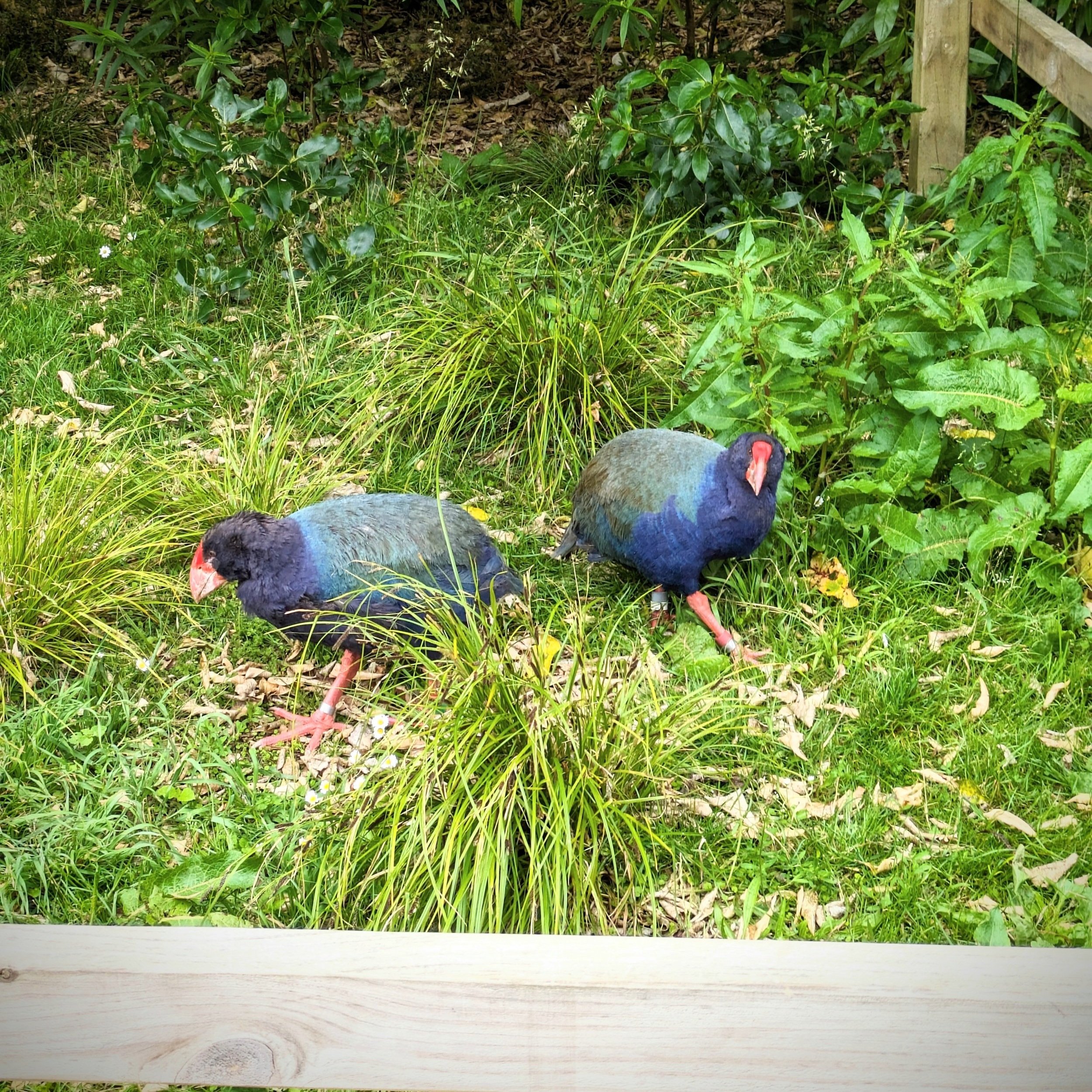
Takahe at Zealandia Sanctuary: only about 500 of these birds, most are kept in offshore wildlife sanctuaries.
Zealandia now boasts more than 40 species of endemic birds, and 500 regular volunteers. From the brink of bird extinction, Zealandia provided the community, the city, and the nation with tangible hope. That hope unites people across New Zealand toward a common goal: to protect and nurture the Taunga (or the treasure) of the nation.
It took 50 endemic species of birds disappearing with the threat of total bird extinction in New Zealand for people to realize the incredible value of their wild birds, found nowhere else in the world.
This year, it is estimated that 5.1 million people will visit New Zealand contributing an average of $2851 each. That means there will be one visitor to this country for every resident. This is no small impact.
New Zealand is now an international destination for eco tourism. People come to see their unique birds and wild landscapes. New Zealand is a network of thriving communities that are working not only to preserve the value of what they still have, but even to restore it.